On-shelf availability: An action guide for retail leaders
Empty shelves cost sales. Discover the causes of low on-shelf availability and practical ways to keep products where shoppers expect them
Read time
10 min
Published on
Nov 27, 2026
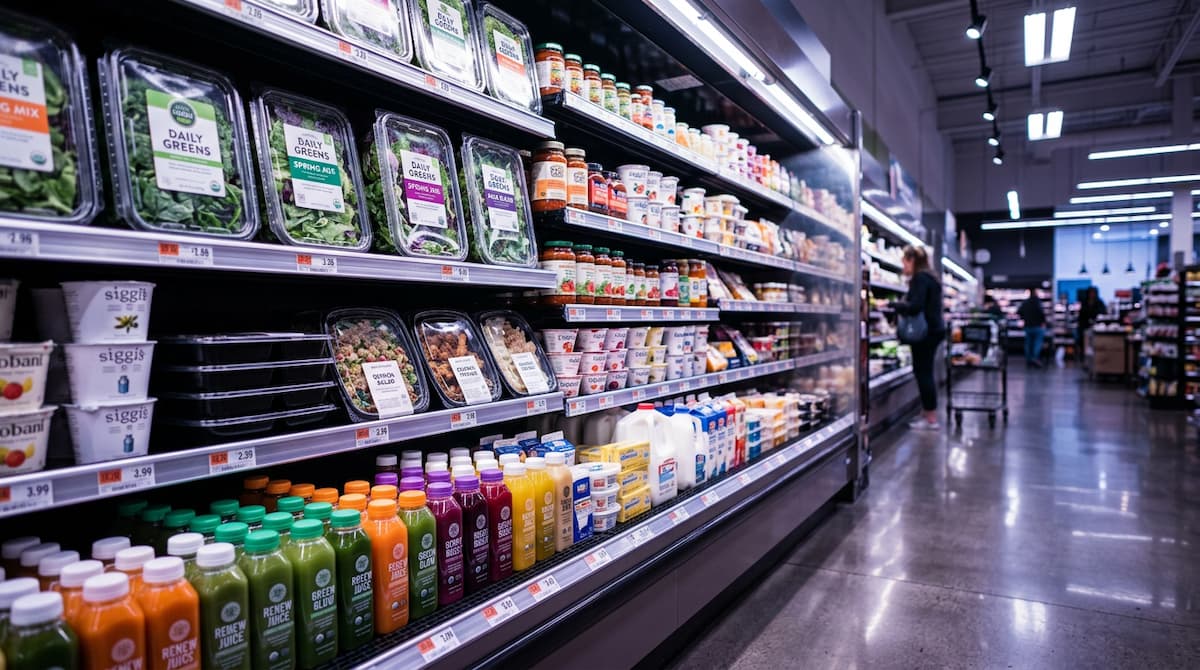
When a shopper reaches for a product that isn’t on the shelf, the retailer risks losing the sale. The cause is rarely as obvious as a stockout, as the product may be in the backroom, on the wrong shelf, or still at the warehouse.
This guide covers what low on-shelf availability costs retailers, why it happens, and how better in-store visibility helps teams fix it.
The cost of low on-shelf availability for retailers
On-shelf availability (OSA) is a metric that measures whether a shopper can find and take product from the shelf at any given point in time. When OSA is low, shoppers looking to buy often won’t find the product, and that can cost retailers in several ways.
One of the biggest concerns is lost sales. According to a collaborative study by the FMI, when faced with an empty shelf:
- 31% of shoppers went to another store
- 26% switched brands
- 19% chose another product from the same brand
- 15% delayed the purchase
- 9% did not buy at all
In a combined 55% of instances, the sale was lost or delayed.
DHL Supply Chain and Retail Economics also found that one in five grocery trips includes at least one missing item. Those gaps amount to roughly £2.1 billion (about $2.8 billion) of sales at risk because of unavailability.
The other costs of low OSA include unreliable demand data, wasted labor, and promotions that underperform.
- Distorted demand data. Shelf gaps produce low sales, which look like weak demand because the product is in stock and shoppers aren’t buying. But in reality, they just can’t find it. Retailers respond to weak demand by ordering less, which makes even less of the product available.
- Wasted labor. When shoppers can’t find a product, they ask staff, who then search the backroom, pulling them away from other important tasks. It’s also inefficient: different customers ask about different products, so staff chase items one at a time instead of stocking shelves in an orderly way.
- Undermined promotions. The SFB 649 Research Center found that shoppers who experience an out-of-stock or low on-shelf availability during a promotion are likely to postpone the purchase while avoiding substitutions. In this way, low OSA during a product’s promotion can hurt current and future sales.
The difference between low on-shelf availability and out-of-stock
Out-of-stock (OOS) means the product is not available in the store at all, whether on the shelf or in the storage area. A gap in on-shelf availability means it is in the store but not where the shopper can buy it.
To the shopper, both represent the same problem because they cannot purchase the item. But the response is different for retail teams. A stock-out requires fixes in ordering and supply, while an availability gap is a question of store execution.
Causes of low on-shelf availability in retail
Products can be missing from retail shelves for several reasons, ranging from operational gaps in replenishment to supply chain disruptions. However, an analysis in the International Journal of Logistics [1] shows that in 70–75% of cases, out-of-stock issues are caused by store-level decisions and practices, not supply chain failures.
It’s important to note that while OOS can contribute to low on-shelf availability, it’s not the only cause.
Late or missed replenishment
In this instance, the shelves are empty while stock sits in the backroom. This is one form of low OSA where retail teams can immediately act to recover sales that might otherwise have been missed. FMI research attributes 25% of out-of-stocks to shelf management gaps, including instances where staff are too few, preoccupied with other tasks, or simply unable to replenish shelves in a timely manner.
Planogram non-compliance and mismatched shelf space
Here, stock is available but stocked on the wrong shelves, wrong aisles, or hidden behind other products. As a result, customers can’t find it where expected and assume the product is unavailable. This creates the same result as actual out-of-stocks because the retail store misses the sale.
However, following the planogram doesn’t always solve the problem. Sometimes the planned space is smaller than the demand for the product, and a high-demand product sells quickly between refills, leaving gaps even when stock is available.
Ordering and forecasting errors
About 47% of out-of-stocks trace back to store ordering and forecasting errors (FMI Collaborative study). When an order is too small or arrives too late, the product sells out before replacement stock reaches the store. Promotions can worsen this problem because they cause demand to rise above normal levels, so stock depletes much faster.
Inaccurate or disconnected inventory
Replenishment depends on what the inventory system believes is available in-store. If the system shows more stock than is actually on hand, it never triggers a reorder, and the shelf stays empty. Research shows that this can happen with up to 60% of inventory records.
Records can deviate from actual inventory for several reasons, including:
- Unrecorded theft, damage, or spoilage
- Scanning or checkout errors at the register
- Manual stock adjustments entered incorrectly
Disconnected systems also contribute to the problem. When various data sources (inventory databases, point-of-sale data, and warehouse shipments) are not synced with the in-store retail analytics, teams have no way to compare what’s sold with new arrivals. As a result, reorder and replenishment decisions aren’t made based on what’s on the shelves, and gaps last longer.
Upstream supply gaps
Sometimes shelves sit empty because the store never received the products. This may be due to late shipment, shortage at the distribution center, or even late delivery. Here, the shelves will remain empty, even when everything else—planogram compliance, shelf replenishment, and ordering systems—worked as planned.
How better visibility helps address low on-shelf availability
Many causes of low OSA come down to poor visibility: into what is on the shelves, how demand is changing, and how much stock the store actually has. Each area below improves when teams can see more of that picture.
- Ordering and forecasting improve when orders reflect what is selling and what is actually on the shelf, not only what was delivered to the store.
- Inventory records improve when they are checked against the shelf and accurately account for loss events and shrink.
- Replenishment improves when staff know which shelves are empty or running low and can prioritize fills.
- Planogram compliance and shelf space improve when teams can see where products sit, how customers interact with them, and which shelves deplete quickly between fills.
Operational fixes can make a real difference. In controlled tests with participating retailers, ECR Retail Loss found that correcting inaccurate inventory records raised sales by 4–8%. But fixes only work when teams know which problems to solve, and that depends on visibility.
How Store Intelligence supports on-shelf availability
Everseen’s Store Intelligence gives teams a real-time view of what’s happening across the whole store, shows managers which shelves are falling short, and suggests next steps. Here’s how it supports on-shelf availability.
Receive empty shelf alerts in real time
31% of shoppers who encounter an empty shelf go to a different store. With Store Intelligence, your teams are alerted when shelves deplete, instead of having to wait for the next shelf check. They can also see which empty shelves are visited most frequently, which helps prioritize refills.
Understand the reason behind empty shelves
Not every depleted shelf is the result of sales. Shelves empty for several reasons: a surge in demand, frequent customer visits to a fixture, or products leaving without being paid for. When loss is the cause, shelves can sit empty while records still show available stock. This discrepancy leads to low OSA.
With Store Intelligence, you can see which of these is driving each empty shelf. For loss, you can see incidents of shelf-based loss, as they occur within the store, viewable by time, fixture, and value lost. This enables your teams to differentiate depletion due to sales from depletion from loss.
It also helps teams prevent loss on the shelves and within the aisles. Learn more about that in our guide on grocery store loss prevention.
Use customer journey mapping to inform forecasting and product placement
Store Intelligence uses heat maps and traffic flow to help teams map the customer journey as shoppers move throughout the store. That means seeing:
- Which areas are visited most often
- Where shoppers stop
- Which shelves and aisles draw attention
This data can inform everything from product placement to demand forecasting. For example, more shoppers visiting an aisle, combined with rising sales at checkout, can signal growing demand. Teams can then act early, which may involve adjusting how shelves are stocked, moving products to a more prominent location, or ordering ahead of a stock-out.
Journey maps show how shoppers move through the store, not who they are. Store Intelligence doesn’t collect any biometric data or use facial recognition. It is aligned with GDPR and the AI Act by design.
Respond to shopper behavior in the moment
Because managers can see where shoppers linger, they can send associates to help customers find products, recommend options, or check the backroom for the item. That can save a sale that would otherwise be lost.
Unusually high lingering at a shelf can also flag smaller problems, like a shelf running empty or a product that’s out of place.
Act before fresh food items run out or expire
Low availability also affects prepared food counters and hot cases. Here, Store Intelligence helps teams see which food counters are empty and what that costs in sales from shoppers who walk away.
With fresh food, there’s also a risk of products sitting too long. Teams can track food freshness, see when items are about to reach the end of their shelf life, and act accordingly.
Understand OSA levels across the entire estate
Store Intelligence also shows shelf availability across the entire estate, so you can act on timely information. For example, if the same product or fixture type keeps running empty across several stores, the cause is likely shared. That calls for a single, estate-wide fix rather than individual store teams applying local ones.
Contact the Everseen team to see how Store Intelligence can support on-shelf availability across your stores.
References
- McKinnon, A. C., Mendes, D., & Nababteh, M. (2007). In-store logistics: An analysis of on-shelf availability and stockout responses for three product groups. International Journal of Logistics: Research and Applications, 10(3), 251–268. doi.org
Subscribe to the blog
Subscribe to Everseen's blog to receive emails about new posts and resources.


