How AI checkout recovers revenue and reduces retail friction
AI checkout explained: How Vision AI recovers lost revenue, reduces friction for shoppers, and helps retailers see beyond the till.
Read time
10 min
Published on
Nov 3, 2026
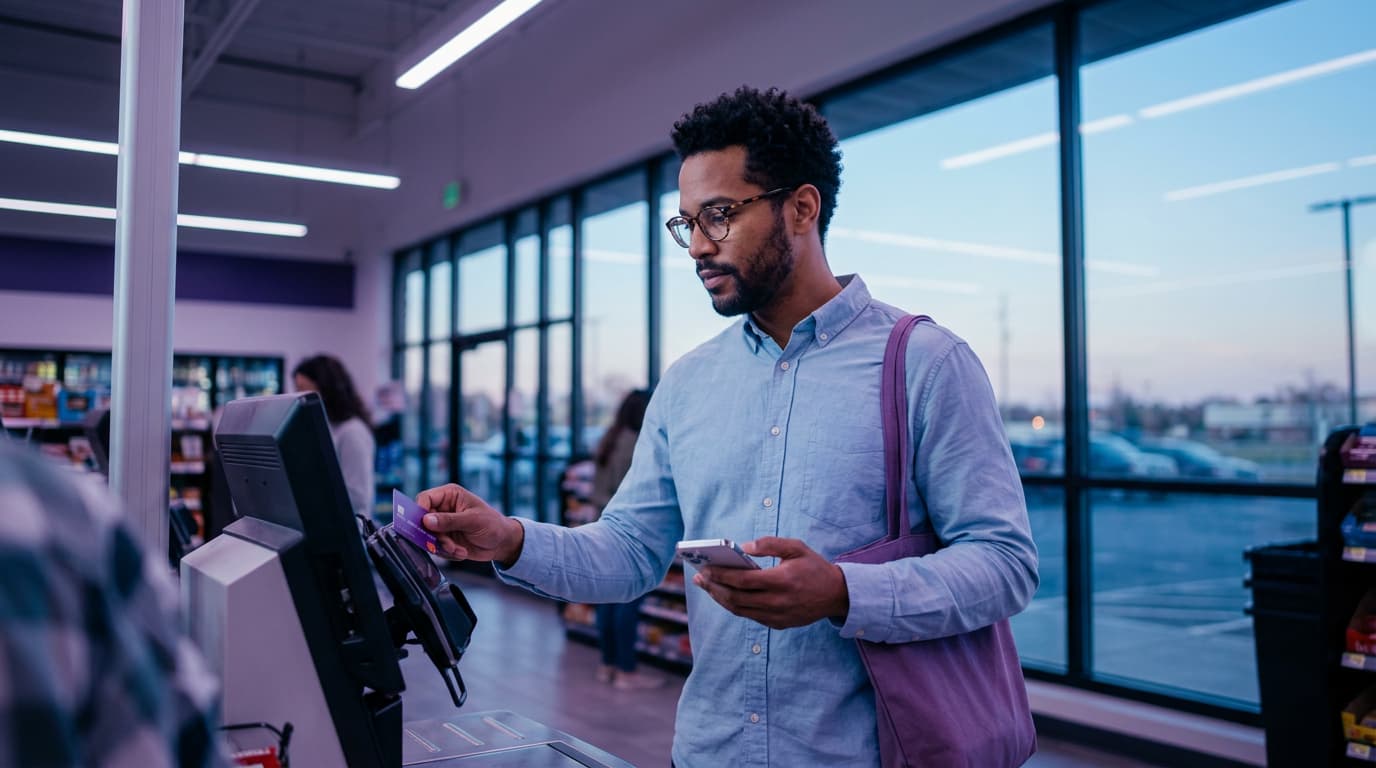
‘AI checkout’ can mean different things, from agentic shopping to payment fraud protection. For retailers focused on loss prevention and revenue recovery, though, it means Vision AI systems that prevent loss and improve efficiency at the point of sale.
At Everseen, this has been our focus for over a decade. We serve more than 10,000 stores globally, and we’ve watched AI capabilities in retail expand from detecting missed scans to recovering loss at the till and optimizing how the checkout process flows for customers.
Here’s how retailers use AI checkout solutions today to recover revenue and reduce friction and where these solutions fit in the wider store.
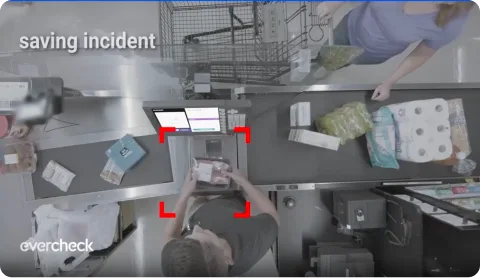
Loss identified, stopped, and recovered at the till
Self-checkout represents a significant source of losses for retailers, with 4% of every transaction involving a loss event. Retailers have deployed several measures to stop loss here, but incorporating AI in checkout has proven to be one of the most effective.
Everseen’s Checkout Intelligence tackles 90% of checkout shrink, and the Everseen platform recovers $500 million annually, combined across all retailers on it.
Here’s how it addresses loss:
- 30+ loss patterns are identified as they occur: Detects non-scans, product switching (where the scanned item does not match the item being purchased), items left in baskets or under carts, and abandoned transactions where customers leave without paying. Each instance is flagged and recorded.
- A soft nudge lets shoppers self-correct: When a missed scan is detected, a screen prompt immediately asks whether all items have been scanned, and an instant replay helps the shopper identify the specific item. Over 80% of non-scans are cleared this way, with no associate involved.
- Presence alone deters loss: The presence of AI checkout reduces loss event rates by 25%.
- Detection keeps improving: The system continuously learns new products and evolving behaviors, and every transaction sharpens it.
This is where AI checkout’s biggest measurable impact exists: recovering loss at the till and integrating with LP efforts.
Analytics and data on precise loss recovery numbers
One of the challenges of AI deployments is estimating impact. Deloitte’s 2025 survey found that investment in AI is rising while returns are “slow to materialize and hard to measure.” One executive at an energy, resources, and industrials company said they could only ballpark the benefits because AI gains were hard to separate from other initiatives like operational excellence and team reorganization.
Retailers deploying AI checkout, however, get a clearer view of impact through real-time retail analytics. Each loss recovered at checkout is documented and accessible from their dashboard.
Teams can see how much revenue is detected per store per time period, as well as how much of those were recovered. This immediately allows teams to evaluate the value delivered by the AI solution.
With more data to work with, loss prevention teams can also present and defend the case at board level more easily.
Fewer interventions freeing up staff time
The benefits of AI checkout also ripple out to how associates operate around the store. Self-checkout systems require supervision, with one attendant overseeing six lanes on average. Whenever disruptions occur at a lane due to common issues like non-scans or weigh scale errors, the checkout process halts as an associate steps in.
AI checkout does not remove the need for supervision, but it considerably reduces how often staff have to step in. Everseen’s Checkout Intelligence, for example, reduces staff interventions by 30% on average because customers can self-correct and address issues themselves. This can free up more staff time.
AI forecasting prevents queue buildup at checkout
AI deployments in retail can impact operations around the store, even if they don’t occur exactly at checkout. When foot traffic rises, whether from a rush or an unexpected event, queues can build before staff have time to open more lanes, which impacts the overall checkout experience. 39% of shoppers also report walking away without a purchase due to long queues.
AI deployments like Everseen’s Store Intelligence help managers keep checkout moving. It uses customer counts to forecast how many lanes are needed and when. Managers are then alerted and can open more lanes as needed.
In addition to loss recovery and efficiency at checkout, AI expands visibility to events that occur immediately before, so managers can respond appropriately.
Read more about how Vision AI facilitates retail queue management.
AI checkout is a small part of a larger picture
AI has transformed how retailers tackle loss at checkout, but shrink happens across the whole store. That makes store-wide AI deployments more important than ever.
Today, Everseen’s Store Intelligence solution helps retailers cover the rest of the store to provide a full picture of operations as they unfold. This is important for direct loss prevention but also for operational efficiency.
Here are some of the ways Store Intelligence helps retailers beyond the checkout:
- Prepared food is accounted for from counter to sale: Hot food is counted in and out, so teams can see what was sold, thrown away, or left unpaid. Items held past the store’s hold limits are also flagged and logged.
- Staff coverage follows shopping demand: Store Intelligence shows where and when shoppers concentrate, so managers have the data to decide where team members are needed most.
- Trip time is measured door to door: For the quick trip, Store Intelligence shows how long a visit takes, giving operations teams a clear idea of how the store is performing.
- Journeys inform layout decisions: Store Intelligence shows where shopping behavior concentrates, so retailers can decide the optimal placement for displays and bundles.
- Remodels are measured before they scale: In stores that are remodeled, retailers can compare data with unremodeled ones to see which changes have the most impact and are worth rolling out.
Looking beyond the checkout
AI checkout has given retailers a practical way to recover revenue and remove friction at one of the most important moments in the shopper journey. But AI can also extend visibility to the rest of the store, helping teams work more efficiently, protect margin, and improve the shopper experience.
If you’re curious how AI checkout and other Vision AI deployments could fit into your operations, contact our team today.
Subscribe to the blog
Subscribe to Everseen's blog to receive emails about new posts and resources.


