Retail loss prevention technology: Types and applications
Explore today's retail loss prevention technology, from legacy tools like CCTV to Vision AI, and see how each one tackles shrink
Written by
Everseen
Read time
10 min
Published on
Oct 14, 2026
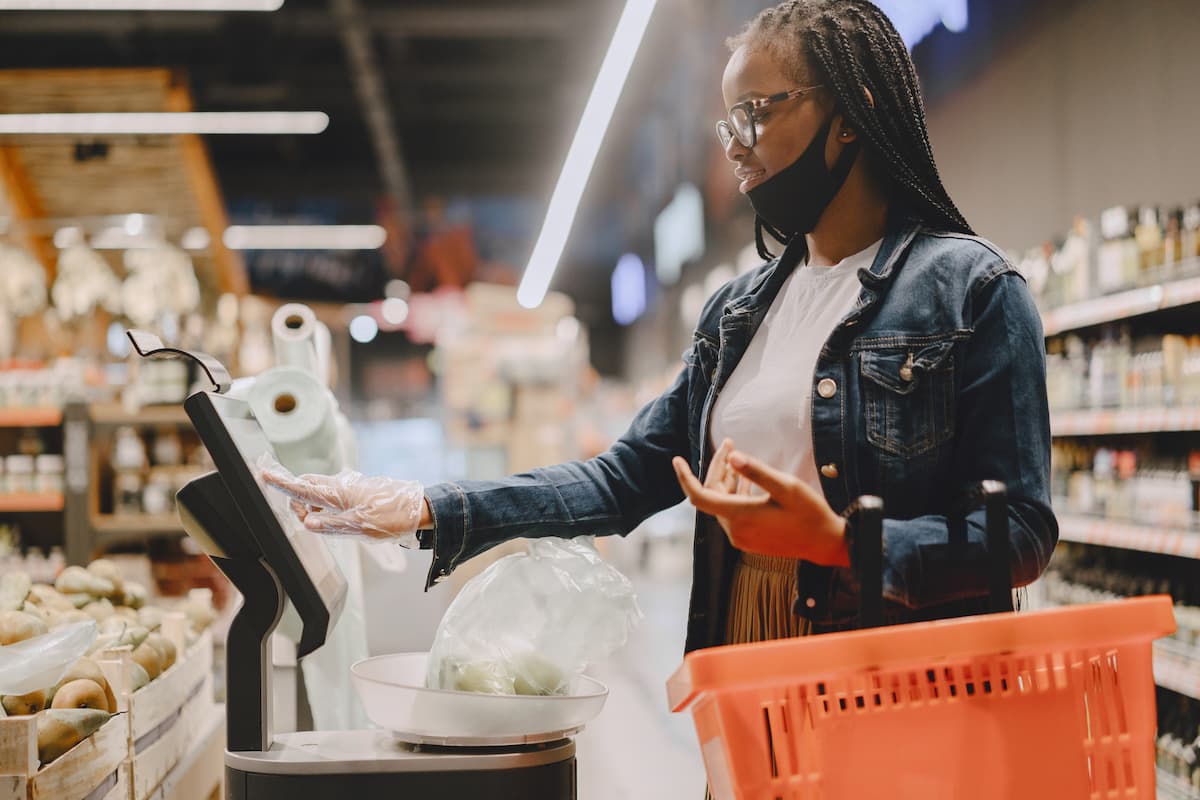
Shrinkage and loss are unavoidable costs every retailer worldwide has to deal with, and the pressure is only growing. Retailers reported an 18% increase in shoplifting incidents in 2024 versus 2023.
Retailers have leaned on standard loss prevention technology like CCTV and EAS tags to keep this loss under control. But in today’s complex store environments, these are proving to be less effective. That’s why businesses are turning to more sophisticated solutions like Vision AI and retail video analytics.
This guide shows what loss prevention technology is available today, what it's capable of, and how it improves on the tools that came before it.
The limitations of legacy loss prevention tech in the modern retail environment
Many legacy technologies still exist today, often integrated into more sophisticated LP solutions. Individually, though, each one only covers a small portion of the problem, either deterrence or detection, rarely both.
The table below breaks down how five of the most common legacy loss prevention technologies work and where they fall short.
Many of these technologies are often deployed simultaneously in the store, and they work together. For example, an EAS alarm at the exit might prompt a staff member to pull up CCTV footage of the moment to see what actually happened.
However, they aren't sufficient to catch and stop loss in real time. For that, retailers are turning to more sophisticated solutions like the ones we cover below.
Computer vision and Vision AI
Vision AI builds on infrastructure retailers already have. Through pattern detection and anomaly identification, it turns existing camera footage into real-time, actionable insights teams can use to tackle loss and shrink. Importantly, deployments like Everseen are also able to act without staff intervention, meaning the majority of loss is resolved without ever pulling a team member away from what they are doing.
Here's how it plays out across the store, using Everseen as the case study.
At checkout
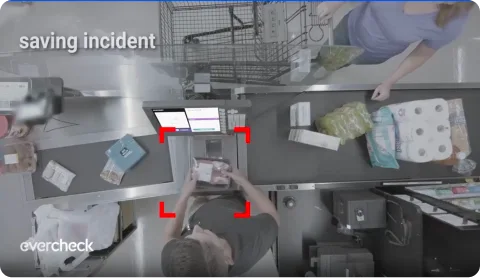
Everseen’s solution is built to process data from both staffed and self-checkout terminals. It can detect over 30 loss patterns in real time, including non-scan incidents, product switching, abandoned transactions, and sweethearting.
When a pattern consistent with loss is identified, Everseen’s solution intervenes immediately by displaying a Soft Nudge on screen, prompting the shopper to self-correct. More than 80% of cases are resolved in this way without a staff member having to step in.
The loss prevention value here is twofold:
- All instances of loss are caught in real-time, instead of being flagged after the fact for review
- Teams can also access a bird's-eye view of what’s happening across all checkout lanes, with events broken down by loss type and pattern.
In the aisles
A lot of loss starts before it ever reaches the till. Vision AI watches high-value aisles for behavioral patterns related to loss, detecting anomalous behavior consistent with loss, like concealment, in-store consumption, and repeated handling.
Here too, loss can be addressed without staff intervention in the form of an in-aisle audio alert, notifying the shopper the area is monitored.
Store-wide intelligence
Vision AI's value is not limited to checkout or the aisle. It can also pull data from the wider store and inform loss prevention at a higher level. Instead of waiting for loss to surface, retailers can query their data to act proactively.
For example, teams can see how demand spikes during peak hours, which loss patterns appear repeatedly, or even run estate-wide comparisons of how one store’s performance compares to the next.
Read more about how teams can query their data using conversational AI for retail.
Data intelligence
Data intelligence is another category of loss prevention technology that builds on prior infrastructure. Here, data from transactions, refunds, timestamps, and register activity are turned into signals for teams to interpret and act on.
Two applications worth mentioning here are exception-based reporting and predictive analytics.
Exception-based reporting
Traditional exception-based reporting flags anything that breaks a fixed rule, e.g., a void over a certain amount or refunds without receipts.
More sophisticated applications compare activity against a unique baseline for an individual employee, register, or store. That way, anomalies flagged are based on what’s unusual for the specific instance, instead of a generic threshold. The result is fewer flags, with each one far more likely to be worth a team's time.
For example, if a cashier's void rate jumps from two to twelve in a single shift, a fixed threshold might miss it since twelve voids could be normal at a busier register. But a behavioral baseline catches it instantly, because it is measured against that cashier's own history, not everyone else's.
Predictive analytics
Predictive analytics helps teams act proactively by learning from historical patterns and forecasting where loss is likely to occur. The system may indicate which hours, registers, or product categories are most exposed and even recommend what to do about it.
In practice, a grocery chain might identify shrink spikes in a specific product category right before a known staffing gap. Rather than waiting for the loss to show up in end-of-month numbers, a predictive system flags the pattern in advance, giving the team a chance to adjust staffing.
See how retail loss prevention analytics fits into the picture.
IoT and the physical layer
A growing layer of physical sensors – smart shelves, temperature monitors, and weight sensors – generate their own real-time data that can help retailers track and prevent loss in a new way.
RFID-based inventory intelligence
RFID is an example of old technology with new applications. Here, item-level tags can be used to compare what has sold against what’s currently on the shelf in real time. If there are discrepancies between items sold and items on the shelves, they are flagged immediately, and retailers can quickly act while the cause is still traceable.
Smart shelves and weight-sensor technology
In grab-and-go stores, weight sensors track items the moment they are placed on or removed from a shelf. Paired with Computer vision, every sale and restock is logged automatically, and loss is flagged the instant it happens rather than at the end of a shift.
Facial recognition and biometric watchlists
Facial recognition and biometric watchlists let retailers flag known shoplifters, organized retail crime groups, and banned individuals by comparing customer faces against that list. It's one of the most controversial loss prevention technologies in deployment today.
GDPR classifies biometric data as a special category of personal data, alongside things like health records and genetic data. Processing it requires explicit consent, which is nearly impossible to obtain from every shopper who walks in the door.
The other problem with facial recognition and biometric watchlists is misidentification. A 2019 NIST study found that most of the facial recognition systems tested performed less accurately for some demographic groups than others. This creates a genuine risk of misidentification and wrongful accusation of innocent shoppers.
These problems are why many retailers prefer deployments that use behavioral detection to identify suspicious patterns instead of identifying the shopper themselves.
This is exactly how Everseen's Vision AI solution works. It collects no biometric data and uses no facial recognition, making it GDPR and AI Act-aligned by design. Our solution is built around what a shopper does, not who they are.
Modern retail requires sophisticated loss prevention technology
Shrink and loss may be a constant in retail, but businesses now have more powerful tools than ever to tackle it. Teams can watch the store in real time, identify and stop loss as it occurs, and access a wealth of data that keeps them on top of events across their entire estate.
The best solutions in this category integrate with existing infrastructure, instead of requiring retailers to start from scratch with a complex, time-consuming deployment.
Everseen is one such solution. It's trusted by 11 of the top 20 grocery retailers worldwide and has helped businesses recover over $500 million annually in lost revenue.
Contact our team to see how our retail loss prevention technology can work for your estate.
Subscribe to the blog
Subscribe to Everseen's blog to receive emails about new posts and resources.


.jpg)