Self-checkout vs. staffed checkout: The loss prevention trade-off
Self-checkout improves labor efficiency but also increases shrinkage. Compare the data on both and see how retailers tackle loss in both environments.
Written by
Everseen
Read time
10 min
Published on
Sep 22, 2026
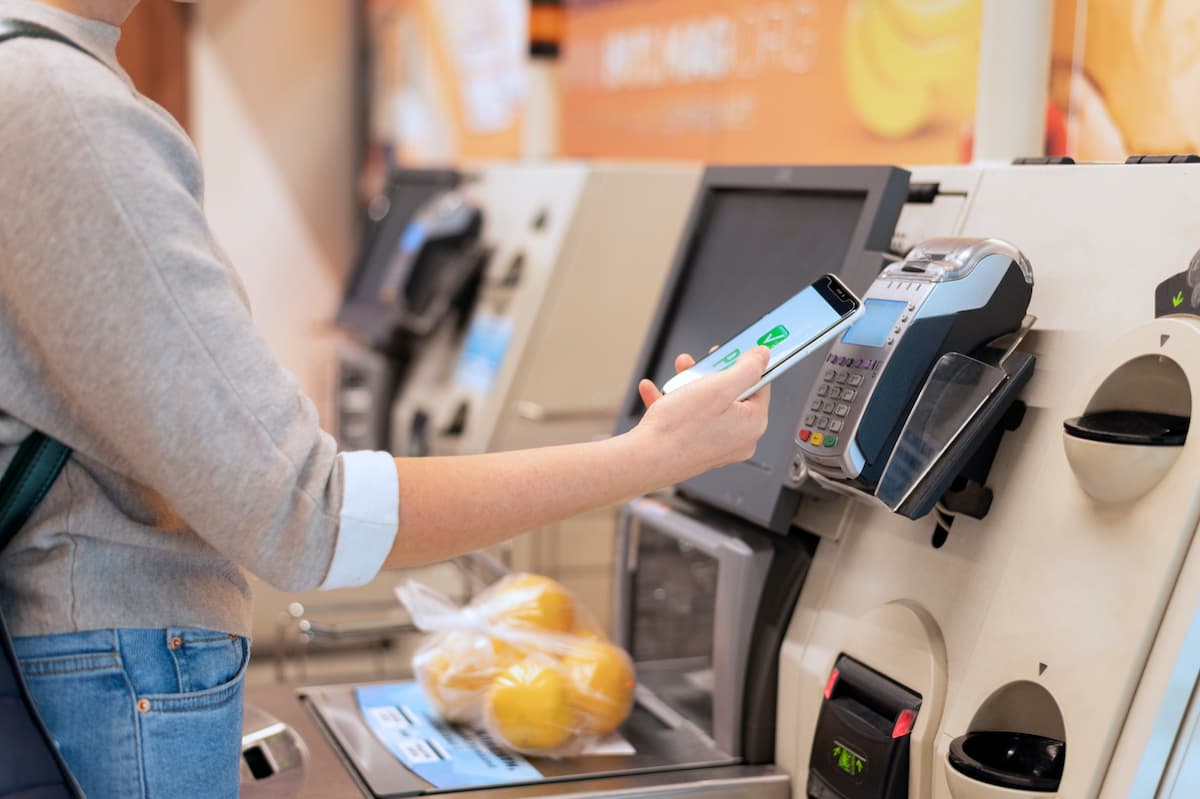
Retailers process transactions two ways: through a staffed lane or through self-checkout. Both exist to get customers through the till quickly and accurately, without giving ground to loss.
Self-checkout trades human oversight for efficiency: it speeds up the checkout process and cuts labor costs, but it thins out the attendant who would otherwise catch a mistake or deter theft in the moment.
With cashiers at the staffed checkout, the oversight remains, but at the cost of the throughput and labor savings SCO delivers.
Neither is strictly better for retail operations, and each carries a different mix of benefits and risks. In this article, we’ll break down the differences between both checkout formats, where loss concentrates, and the trade-offs retailers should be aware of during deployment.
How self-checkout transformed retail operations
Staffed checkout dominated retail until self-checkout scaled rapidly starting around 2016. By the end of 2017, retailers had installed almost 300,000 self-checkout stations worldwide, a 14% rise over 2016. By 2020, RBR reported a further 25% jump in SCO installations.
Several factors motivated the rollout spread of SCO, including customer demand, improved efficiency, and better cost economics.
Many retailers saw self-checkout as a way to move queues faster without adding headcount. Circle K said the shift helped staff "concentrate on serving customers" during busy periods.
And the results show the benefits. 83% of retailers reported reducing front-of-store staffing requirements, and 54% of grocery retailers reported an increase in basket size following SCO deployment. (Kiosk Marketplace)
Unfortunately, self-checkout also has a significant impact on overall shrink, and that's where the trade-off lies.
Greater loss is an inherent problem with self-checkout
SCO counters can operate with reduced oversight compared to staffed checkout, and that’s simultaneously their biggest advantage and drawback. Because they are designed with efficiency and customer experience in mind, a single attendant is often enough to handle the transaction volume of five or more machines.
But one worker cannot reliably catch every missed scan, product switch, or genuine customer mistake across every lane.
Here are some numbers that show the increased rate of loss at self-checkout:
- ECR Loss reports that shrink rises in self-checkout by 22% after the first year of installation and runs 33% higher on average compared to stores without it.
- Shrinkage climbs by roughly 31% above baseline in stores with 55-60% self-checkout utilization.
- Some grocery retailers with fixed self-checkout record 90% to 147% higher shrink compared to stores with none at all.
The numbers show a significant shrinkage gap between staffed and self-checkout lanes. Less oversight creates opportunities for loss in the latter, whether it’s intentional or unintentional.
Shrinkage and loss are not an exclusive SCO problem
It’s important to note that stores with staffed checkout also experience varying levels of shrink.
The global retail shrink rate is between 1.4% and 1.6% across all outfits, representing $112.1 billion in losses annually. We also see that stores with staffed checkouts consistently see employee theft driving a meaningful share of that figure, accounting for up to 29% of all shrink.
Additionally, loss patterns like sweethearting that occur in both cashier staffed and self-checkout cost retailers up to $80 billion annually.
So the solution isn’t as simple as removing self-checkout to solve the shrink problem. Especially since retail technologies like Vision AI are able to cut losses by as much as 90% in stores with SCO.
Although big-box retailers like Target and Dollar General have scaled back self-checkout, they still very much remain a vital part of their business model, offering customers and retailers a quicker alternative to self-checkout.
The way ECR Retail Loss’s strategic coordinator, Colin Peacock, sees it, SCO has an engineering problem. Most of self-checkout loss comes from customers making everyday mistakes and a few deliberate attempts. With better detection at the point of loss, retailers could fix the oversight problem without having to give up on the labor or convenience benefits of the format.
Breakdown of the staffed and self-checkout tradeoff
Sources of self-checkout loss
The increased shrink rates in self-checkout can be a result of mistakes and customer error or deliberate theft. Here are examples of how each type shows up in daily operations:
- Accidental shrink or loss: Failed scans, items left in the basket or underneath carts, customer confusion, and weight or produce misreads at the bagging scale.
- Intentional shrink or loss: Produce or ticket switching, abandoned transactions, and scan skipping.
The clearest data on how these two categories affect businesses comes from an ECR Retail Loss’s global survey of 93 retailers. It found that malicious behavior only accounted for an estimated 43% of all loss at fixed self-checkout, with the number rising above 50% for Scan and Go and fully mobile checkout formats. That suggests that more than half of all self-checkout loss, or fixed SCO specifically, comes from errors rather than intent.
Both categories contribute to the loss problem, and the right solution should address both types of SCO loss.
Everseen: The modern approach to self-checkout loss prevention
Oversight remains the biggest hurdle of the self-checkout format. It doesn’t matter how much a new SCO lane could potentially increase labor efficiency if there’s no effective loss prevention strategy in place.
And that is where Everseen’s Vision AI solution comes in. It tackles the problem of shrink and loss by providing real-time monitoring across all self-checkout lanes.
Everseen’s system can identify more than 30 loss patterns at self-checkout and intervene without staff involvement. It uses a Soft Nudge that displays a simple message on screen, inviting the customer to self-correct. This approach cuts staff interventions by 30% on average, and more than 80% of non-scan incidents are cleared by the Soft Nudge alone, without an attendant needing to step in.
Everseen tackles up to 90% of checkout shrink, and for a typical grocery retailer, the recoverable opportunity at checkout runs to an average of $540,000 every single week. This means retailers can keep the benefits of self-checkout without absorbing the loss that has historically come with it.
Contact our team to see how Everseen’s self-checkout solution fits into your retail operations.
Subscribe to the blog
Subscribe to Everseen's blog to receive emails about new posts and resources.


.jpg)