Computer vision for retail loss prevention
Self-checkout transformed retail economics and created a loss problem traditional LP was never designed to address. Use cases, deployment realities and ROI evidence.
Written by
Everseen
Read time
10 min
Published on
Aug 21, 2026
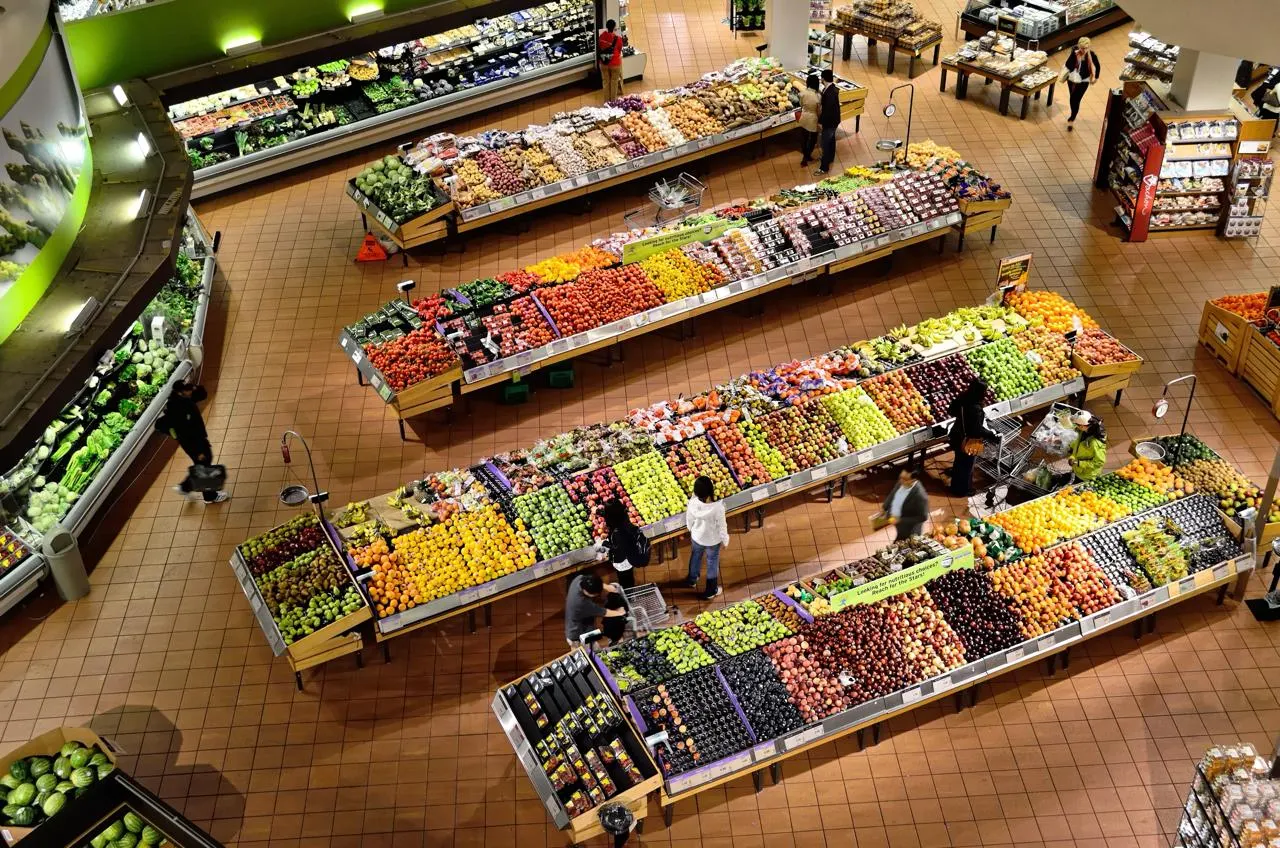
Self-checkout transformed the economics of retail. It also created a loss problem that traditional loss prevention is not designed to address. Removing staff from the till improved efficiency, but it also reduced human oversight and theft deterrence.
Computer vision is how the industry's largest retailers are closing that gap. It can be deployed at the checkout, in the aisle, and across the checkout area to monitor the patterns and behaviours associated with loss events. Then, computer vision acts on them by triggering an immediate response in real time, without requiring staff to be present at every transaction.
This article covers how computer vision works in a retail loss prevention context, the use cases where it has the most impact, and what to look for when evaluating a solution. If you’re building a business case, we've also included ROI evidence based on real-world deployments.
What is computer vision?
Computer vision is the branch of artificial intelligence that enables machines to interpret and act on visual data. In retail, that means cameras are connected to systems that can distinguish between shopping behaviours, identify loss patterns, and help recover revenue. It works with existing camera infrastructure without requiring hardware replacement.
Computer vision vs Vision AI: What's the difference?
Computer vision is the underlying capability, while vision AI is the result of that capability being trained on specific environments, behavioural patterns, and contexts.
A general computer vision system can detect that something is happening in frame. But a Vision AI system trained on millions of retail-specific transactions, loss events, and behavioural sequences understands what is happening, why, and can surface recommendations to teams.
Throughout this article, we use "computer vision" as the broader, more familiar term. But in retail loss prevention, the systems providing reliable results are Vision AI, because they are trained on specific patterns and behaviours that distinguish ordinary shopping from loss.
Why is computer vision used in retail?
Computer vision is used in retail because the retail environment has changed in ways that older approaches cannot handle. We see loss patterns emerging with the self-checkout rollout, and store workers are unable to effectively tackle and prevent them. Stores with self-checkout report 33% higher losses on average than comparable stores without it. [ECR Retail Loss].
Traditional loss prevention is not built for the self-checkout environment
CCTV and manual auditing have long been the foundation of retail loss prevention. In a staffed checkout environment, store teams are present and able to step in when something does not look right.
Self-checkout changed that dynamic. Retailers rolled out SCO to improve efficiency and identify new cost-saving opportunities without compromising on customer satisfaction.
And it worked. Over 50% of shoppers choose self-checkout when given the option.
But SCO removed the human presence that traditional loss prevention depended on. Without an operator in each lane, loss patterns like missed scans, product switches, and items left in the basket become harder to catch in the moment. The effect also extends beyond the checkout. With fewer staff managing the tills, there are fewer available on the shop floor to act as a deterrent in the aisles.
Computer vision is the fastest way to flag and stop loss
Computer vision applied in a loss prevention context gives teams visibility, helps recover loss, and reduces friction for floor teams. Where CCTV records and audits identify loss after the fact, computer vision detects loss patterns as they occur.
Speed and timing are what make it effective here. Loss patterns unfold in seconds, faster than any team member can act on. But computer vision operates across every lane and every transaction simultaneously, identifying these patterns and providing context for action.
Traditional loss prevention and computer vision compared
How computer vision stops loss in the modern retail environment
Computer vision stops loss by processing visual data from existing camera infrastructure in real time, detecting the behavioural patterns that correlate with loss, and triggering action within the transaction window before the moment has passed.
The real value is that it operates across the points in the store where loss is most likely to begin: the self-checkout lane, the aisle, and the wider checkout area.
Deployment integrates with existing infrastructure
Computer vision setup overlays what is already in place in retail stores, including cameras and POS systems. No hardware rip-and-replace required. That means stores can get their loss detection and prevention up and running far quicker.
And for IT and security teams, the process is straightforward and designed to be as unobstructive as possible.
Shopping behaviour analysed for loss patterns
The system identifies behavioural patterns – sequences of actions that correlate with specific loss events. That could be a product moved without being scanned or an item placed in a bag before payment is completed.
Detection is built on models trained across millions of real retail transactions. Every transaction processed and every loss pattern flagged contributes to the system’s ability to identify more patterns in the future as it continuously evolves.
Processing happens at the edge, in the store
The footage captured by computer vision is processed locally on hardware within the store. This is what makes real-time intervention possible.
As a non-scan event occurs in checkout, the system flags it and triggers action within milliseconds; this speed would not be possible through cloud processing. It is also why computer vision is suited to a modern retail environment, where it can monitor every transaction across every lane simultaneously, regardless of how many are running at once.
Action is triggered within the transaction window
Detection alone does not recover revenue, and computer vision is designed to trigger intervention before the transaction closes.
Depending on the context, that might be a soft nudge on a self-checkout screen, an audio alert in the aisle, or a notification to a checkout manager when staff support is needed. In each case, the goal is to resolve the situation with minimal staff involvement, keep the shopping experience intact, and, most importantly, recover value at the point of loss.
Every transaction feeds the store’s operational intelligence
In addition to stopping loss as it occurs, each event contributes to an analytics layer that complies data across the entire store. All of this information is available to teams in real-time, providing a clear picture on the state of affairs.
For operational and loss prevention leadership, that means seeing exactly where loss is concentrated, how behaviours are evolving, and which locations require attention. Operational intelligence holds even more value when defending the financial decision of computer vision rollout. The intelligence layer shows the value of recovered revenue from day one, making it easier to defend at board level.
Five Computer vision use cases in retail loss prevention
Computer vision addresses loss and captures sales across several points in the retail store, including the following:
1. Checkout loss detection
Self-checkout generates a high volume of transactions, but because there’s no operator present, loss patterns that would otherwise be caught or avoided completely go undetected. Computer vision closes that gap by monitoring each transaction in real time, detecting specific loss patterns like
- Non-scan incidents
- Product switching
- Items left in baskets or underneath carts
- Abandoned transactions
- Fresh produce and bagged item recognition
- Mis-scanning
2. In-aisle behavioural detection
A significant portion of retail loss begins in the aisle, before a shopper reaches the checkout. Computer vision monitors behavioural patterns across high-value shelf areas, identifying the signals that correlate with concealment and theft. Some of these patterns include:
- Concealment: Items hidden on the person or in bags
- In-store consumption before payment
- Excessive product handling
- Multiple picks from the same shelf location
- Repeated returns to high-value areas
3. Queue and checkout-area management
Long queues and insufficient staffing at the checkout are not a direct source of shrink, but they can cause cart abandonment as customers refuse to wait. That equals completed sales that never go through. Findings from Adyen suggest that retailers lost $37.7B in 2018 due to long queues.
Computer vision monitors queue length, wait time, and staffing coverage in real time. It gives checkout managers the intelligence to act before the situation affects the customer experience and the till.
4. Foot traffic and people counting
Understanding how many customers are in a store and how they move through the space supports teams’ decision-making. It can inform which checkout lanes need to be staffed, whether more should be opened up, and if the store is understaffed or overstaffed. Here, computer vision shines by offering a forecast of demand.
5. Loss intelligence and investigation support
In addition to stopping loss and recovering value, computer vision’s data can support retailer investigations when incidents require documentation, and, importantly, it can surface patterns across the estate. This intelligence can be used by operational and loss prevention teams to understand what happened, where loss is concentrating, and why.
Computer vision in retail: Use cases at a glance
Here’s what real-world computer vision deployment covers
The use cases above are not theoretical and are actively in effect across thousands of retail stores globally. Below, we share the products Everseen, a Vision AI company, has built to address each of these use cases, the loss patterns they detect, and the results they deliver. This is all based on more than 15 million retail transactions analysed every day across 10,000+ stores worldwide.
Checkout loss detection: Evercheck
Everseen's Evercheck monitors every self-checkout transaction in real time and can detect more than 30 unique fraud and loss patterns. Intervention is via a soft nudge on screen that allows customers to self-correct before completing payment. In this way, the checkout is seamless, there’s zero confrontation, and floor teams can continue to focus on high-value activity.
With Evercheck, more than 80% of non-scan incidents are resolved without staff involvement, and the system's presence alone reduces loss event rates by 25%.
In-aisle behavioural detection and shelf monitoring: Evershelf
Evershelf monitors behavioural patterns across high-value, high-risk shelf areas. It detects the sequences that correlate with concealment, theft, and loss before they reach the checkout. And, when a loss pattern is identified, it uses immediate deterrence – an in-aisle audio alert informing the shopper that the area is being monitored.
Where investigations are conducted, Evershelf supports case documentation, providing the evidence for case building.
Checkout experience and queue management: Evereagle
Evereagle gives checkout managers real-time visibility of queue conditions, staffing coverage, and customer flow. This is valuable insight that forecasts lane demand based on individual retailers' own service-level rules. Then, floor managers can respond accordingly and assign workers as needed before the customer experience deteriorates.
The intelligence layer: Everact
Everact aggregates data from Evercheck, Evershelf, and Evereagle into a single intelligence layer. It helps retail and LP leadership gain a full picture of store events: what’s happening, why, and what needs to be the next top priority.
The ROI of computer vision in retail
How effective is computer vision in retail loss prevention? And is it a worthy investment? According to independent research, it is.
A Forrester study of Everseen's platform found retailers achieved 374% ROI over three years. And for large grocery deployments, Everseen adds an average of $88,000 to each store's bottom line annually.
For loss recovery, Everseen's platform has contributed to $500 million in recovered revenue annually across its retailer base. For a typical grocer, the recoverable opportunity represents £400,000 per week.
The ROI of computer vision at a glance:
- 374% ROI over three years (Forrester)
- $88,000 added to each store's bottom line annually, on average (for large retailers)
- $500 million recovered annually across the platform
- £400,000 per week in recoverable revenue for a typical grocer
How to evaluate a computer vision solution
Retail loss is complicated and ever-evolving, and not all computer visions can tackle it at the same level. Before selecting a vendor and committing to a rollout, these are the questions worth asking:
- Where is footage processed? Edge processing means the system can intervene before a transaction closes. Cloud-based processing introduces latency that makes real-time intervention much harder.
- How robust is the retail training data? A system trained on real retail environments will accurately distinguish genuine theft from ordinary shopping behaviour.
- How flexible is the hardware integration? A solution that requires a full camera overhaul creates unnecessary friction. Hardware-agnostic systems that integrate with existing infrastructure are faster to deploy and easier to scale.
- How is compliance built into the architecture? GDPR and the EU AI Act are live considerations for European retailers. A solution designed for compliance from the ground up carries less downstream risk than one retrofitted for it.
- What is the deployment scale? There is a real difference between a vendor running pilots and one operating across thousands of stores over many years. A large scale means a proven rollout process for your store and, significantly, more training data that improve model accuracy.
Conclusion: Closing the gap
Retailers have always dealt with loss and shrink. But the loss opportunities have grown with the modern retail environment and self-checkout.
Computer vision closes that gap, operating at the checkout, in the aisle, and across critical touch points in the store. All without adding headcount or disrupting the customer experience. Sophisticated computer vision systems are also able to help retailers capture sales that queue friction could have cost", delivering additional value besides simply stopping loss.
11 out of the top 20 grocery retailers have deployed Everseen’s vision AI solution and achieved a 374% ROI over 3 years. This is proof that retailers can keep the efficiency of self-checkout and reduce shrink and loss simultaneously.
If you would like to understand what a deployment looks like for your operation, Everseen's team works with retailers at every stage, from initial evaluation to estate-wide rollout.
Book a demo to learn more.
Frequently asked questions
Cameras monitor each transaction in real time. The system analyzes what is happening at the terminal, tracking items as they are handled and identifying when what is present does not match what has been scanned. When a potential loss event is detected, the system prompts the shopper to review their items before the transaction closes.
No. Retail computer vision for loss prevention is behavioural, not identity-based. It detects patterns, not shoppers, checking for whether an item was scanned, how products are being handled, and whether a transaction is complete. No biometric data is collected.
Compliance depends on how the system is designed. Systems built on a privacy-by-design architecture are aligned with both GDPR and the EU AI Act.
In most cases, existing infrastructure can be used without replacement. Modern computer vision systems are hardware agnostic and integrate with most POS systems. Depending on the deployment, GPU or CPU upgrades may be required, and these are typically scoped per store.
Computer vision is designed not to create shopper friction. When a potential loss event is detected, the system prompts the shopper to review their items via a screen message (a soft nudge that allows self-correction without staff involvement.)
Independent research by Forrester into Everseen’s platform found retailers achieved 374% ROI over three years. On a per-store basis, the average uplift is $88,000 annually. ROI will vary by retailer, estate size, and the use cases deployed.